What Is a Junk Journal — And How Do You Make Your First One?
If you've ever fallen down a junk journal rabbit hole on YouTube or Pinterest, you already know what happens next.
You start watching someone fold a paper bag into a journal signature. Then another video. Then you're looking at their supply haul, then their finished journal, then you're opening your kitchen junk drawer and wondering if that stack of old birthday cards could be something.
Junk journaling has that effect. It's one of the most accessible, low-cost, endlessly creative hobbies going right now — and once you understand what it actually is, the barrier to starting is almost zero.
"A junk journal isn't made from trash. It's made from materials that have history, texture, and character — things that carry a story before a single word is written in them."
— Dr. Destini Copp, HobbyScoolAt HobbyScool, junk journaling consistently draws some of our most enthusiastic community members — people who love the tactile, the handmade, and the deeply personal. Here's everything you need to understand about the craft and how to get started.
What Is a Junk Journal?
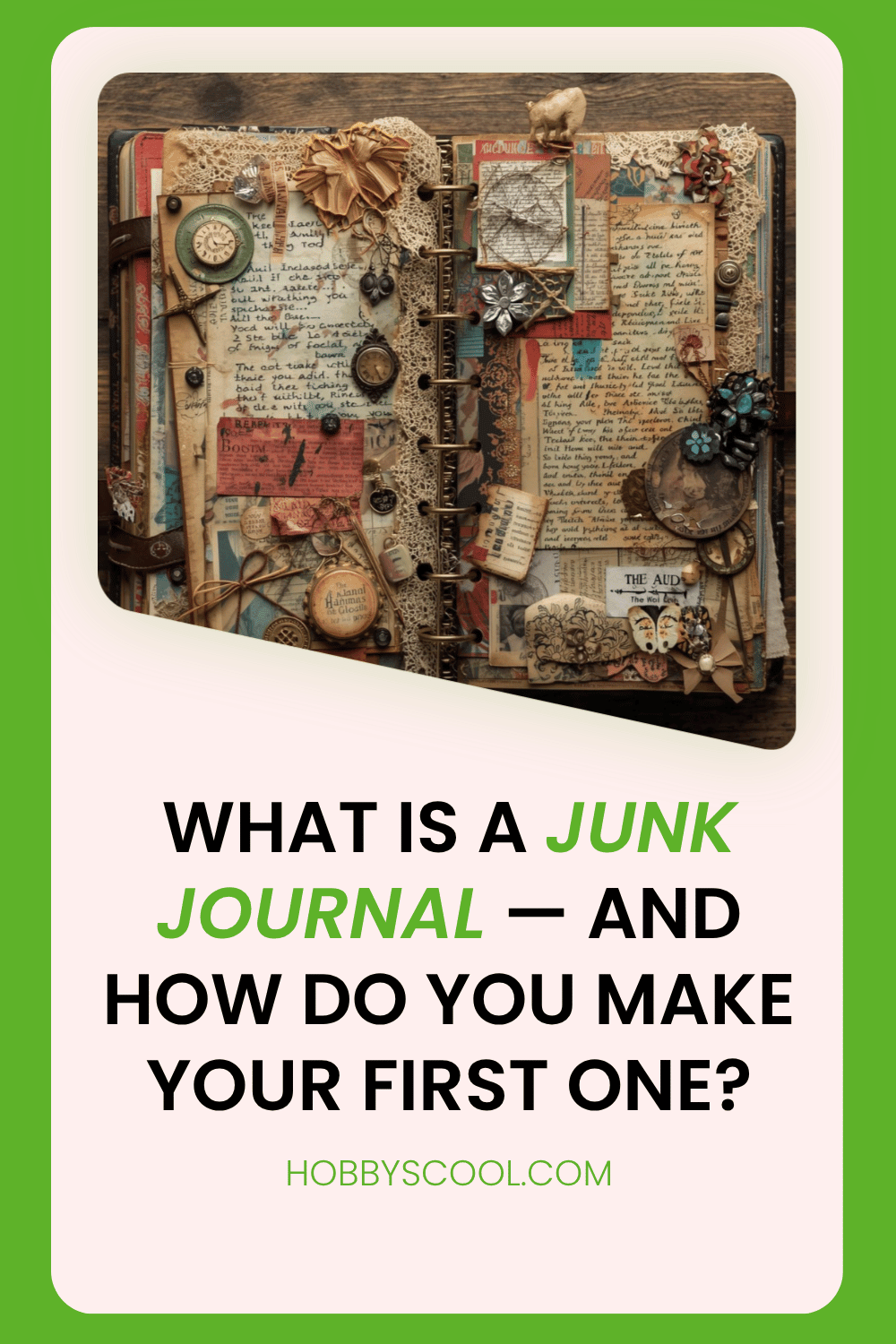
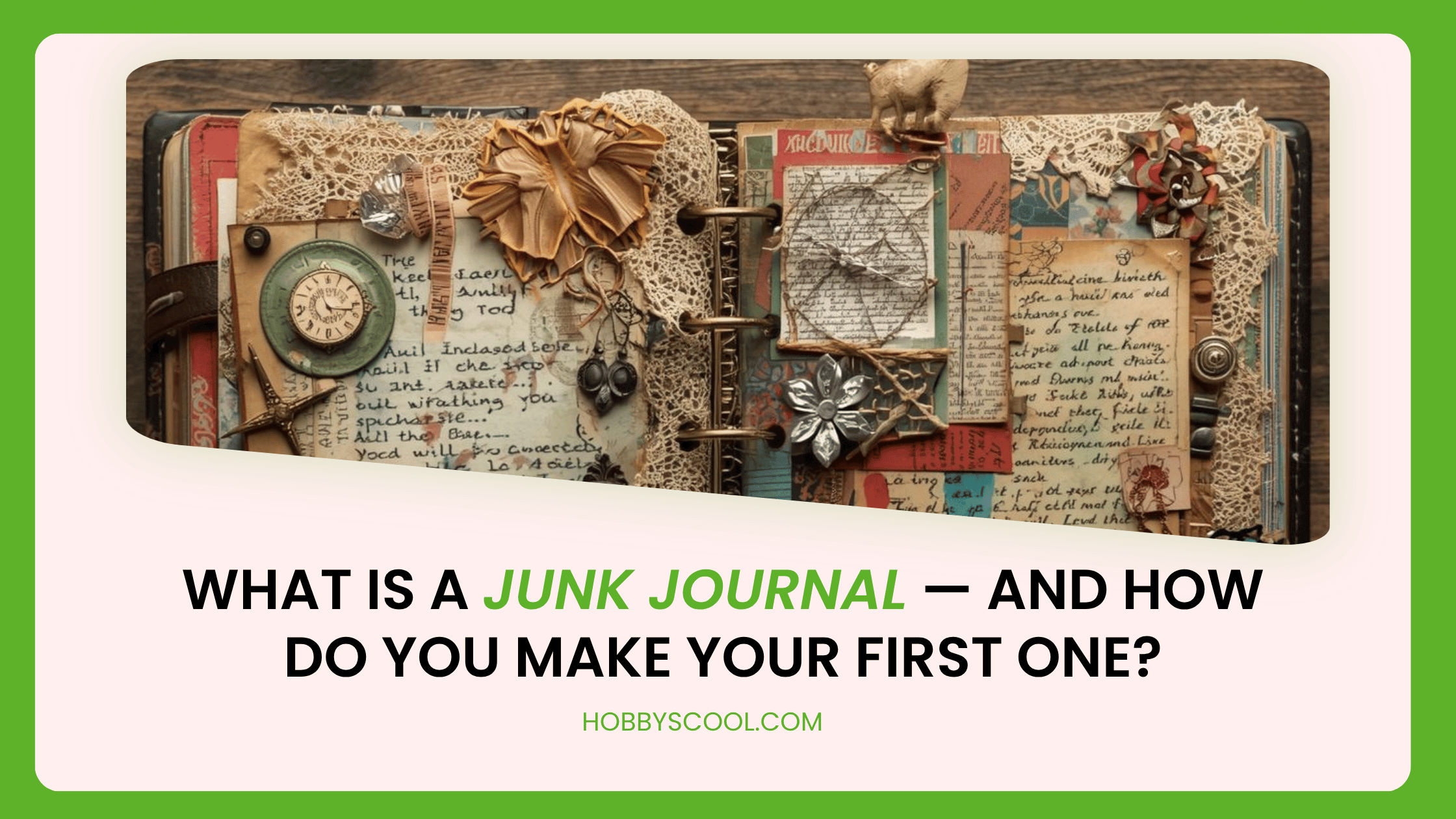
A junk journal is a handmade book assembled almost entirely from repurposed, recycled, and "found" materials. The pages might be old book pages, paper grocery bags, brown kraft paper, vintage sheet music, pages torn from old calendars, tissue paper, fabric scraps, manila envelopes, maps, or wrapping paper. The cover is often cardboard from a cereal box, a hardcover book cover, or thick decorative paper.
The inside is used however the maker wants — writing, sketching, collage, photographs, memory-keeping, lists, watercolor, stamping, letter-writing. There are no rules about what goes in. The journal itself is the creative act.
The name comes from the materials: they're the "junk" most people throw away without a second thought. The junk journal community has built an entire aesthetic and practice around the idea that these discarded, worn, vintage-feeling materials are actually more interesting and beautiful than anything you'd buy new.
Why Junk Journaling Has Such a Devoted Following
A few things make this hobby unusually compelling:
- It's almost free to start. The whole point is using what you already have. A paper bag, some old book pages, a piece of cardboard, and basic thread are enough for a first journal.
- Every journal is completely one-of-a-kind. Because the materials are by definition unrepeatable — you can't buy "the same paper bag" again — no two junk journals look alike.
- It eliminates perfectionism. When your pages are made from grocery bags and old book pages, there's nothing precious to protect. The imperfection is the aesthetic.
- It rewards saving things. Old letters, vintage stamps, pretty packaging, interesting scraps — junk journaling gives all of it a purpose and a home.
What You Need to Start
📦 For the Cover
- Cereal box or cracker box cardboard
- Heavy book board (from an old hardcover)
- Thick decorative paper or kraft board
- Fabric (glued over cardboard)
📄 For Inner Pages
- Paper grocery bags (cut open and folded)
- Old book pages or dictionary pages
- Kraft paper scraps
- Tissue paper, tissue paper, envelopes
- Sheet music, maps, old letters
- Wrapping paper and packaging
🔗 For Binding
- Waxed thread or linen thread + needle (pamphlet stitch)
- Binder rings (no sewing needed)
- Binder clips + covers (simplest approach)
- Stapler (for small signatures)
✨ For Decorating
- Stamps and ink pads
- Washi tape
- Acrylic paint and brushes
- Gel medium (adhesive + sealer)
- Vintage ephemera — tags, labels, tickets, buttons
Don't buy anything before you make your first journal. Raid your recycling, your junk drawer, and your gift wrap stash. The whole philosophy of junk journaling is that you already have everything you need — the first journal will prove it.
How to Make Your First Junk Journal
Gather Your Paper
Collect a variety of paper scraps — grocery bags, book pages, kraft paper, envelopes, tissue paper. Aim for at least 20–30 pieces. Different textures and colors make the finished journal more interesting.
Create Your Signatures
Fold groups of 3–5 sheets in half — these folded groups are called "signatures." Nest pages inside each other. You might layer different paper types within a signature for variety: a grocery bag page, a book page, a tissue paper page.
Make Your Cover
Cut two pieces of cardboard slightly larger than your folded signatures. Decorate them with paint, paper, stamping, or collage — or leave them raw for a rustic look. The cover can be as simple or elaborate as you want.
Bind It Together
The simplest binding for a first journal: punch three holes through the cover and all signatures in alignment, then sew through with waxed thread using a basic pamphlet stitch. Alternatively, use binder rings — punch two holes and you're done.
Prepare Some Pages
Before you start using the journal, prepare a few pages: add a wash of paint, stamp some background texture, glue in some collage scraps. Pre-treating a few pages removes the blank-page anxiety and gives you somewhere easy to start.
Just Use It
Write something. Glue something. Paint something. Tuck in a ticket stub or a pressed flower. The journal becomes richer with every layer you add — and every layer covers anything you'd rather not look at.
What Do People Actually Put in Junk Journals?
Journaling and Writing
Many makers use junk journals as actual journals — daily writing, gratitude pages, poetry, letters to themselves. The interesting, textured pages make writing feel different than a standard notebook.
Memory-Keeping and Scrapbooking
Photos, ticket stubs, pressed flowers, labels, tags — junk journals function beautifully as a looser, more tactile alternative to traditional scrapbooking. Nothing has to be perfectly arranged.
Art and Mixed Media
Painting, collage, stamping, and sketching directly on junk journal pages — the varied textures of the paper create interesting effects that plain sketchbook paper can't replicate.
Selling and Gifting
Handmade junk journals have an active resale community on Etsy and at craft fairs. Many makers also create them as gifts — a completely personal, handmade book is one of the most meaningful things you can give someone.
See a Junk Journal Built From Scratch at the Art of Expression Summit
The HobbyScool Art of Expression Summit (May 19–21, 2026) features a session on Junk Journal from Start to Finish with Einat Kessler — a complete walkthrough from gathering materials to finished, usable journal. If you've been curious but felt uncertain about where to start, this session removes every barrier.
The summit also includes sessions on hand-painted journal covers and mixed media approaches that pair naturally with junk journaling. All sessions are free during the summit window.
Free Virtual Summit — Junk Journal from Start to Finish
A complete junk journal session plus workshops on hand-painted covers, mixed media, watercolor, hand lettering, and more. Free and open to all levels.
Register Free →Frequently Asked Questions
A junk journal is a handmade book assembled from repurposed, recycled, and "junk" materials — old book pages, paper bags, vintage ephemera, envelopes, fabric scraps, maps, and anything else with interesting texture or history. The pages are layered, decorated, and used for writing, sketching, collage, and memory-keeping. There are no rules for what goes inside — that's the point.
No. The most common junk journal binding is a simple pamphlet stitch or the use of binder rings, both of which beginners can learn in minutes. Many makers also start with a bound composition notebook as the base — no sewing required at all.
You need: a cover material (cereal box cardboard or heavy book board), inner pages (any paper scraps — book pages, kraft bags, tissue paper, envelopes), a simple binding method (waxed thread and a needle, or binder rings), and adhesive (gel medium or a glue stick). Everything else is optional embellishment.
Yes — the HobbyScool Art of Expression Summit (May 19–21, 2026) includes a session on "Junk Journal from Start to Finish" led by Einat Kessler, walking through the complete process from cover to inner pages. The summit is free to attend.
Yes — junk journals have an active and enthusiastic resale market on Etsy and at craft fairs. Handmade, one-of-a-kind journals with interesting materials and good construction sell well. Many makers start selling once they've made several journals and refined their process.