What Is Eco-Friendly Crafting (And Why It Matters More Than Ever This Earth Month)

If you've been crafting for a while, you already know the joy of turning raw materials into something beautiful. But here's the thing — most of us don't stop to think about what happens to all those supplies once a project is done.
Plastic packaging. Synthetic glitter that washes into waterways. Foam that never breaks down. Fabric scraps piling up in landfills.
Eco-friendly crafting is the practice of creating with intention — choosing materials, tools, and methods that reduce environmental impact without sacrificing creativity or joy. And Earth Month is the perfect time to explore what that actually looks like in your craft room.
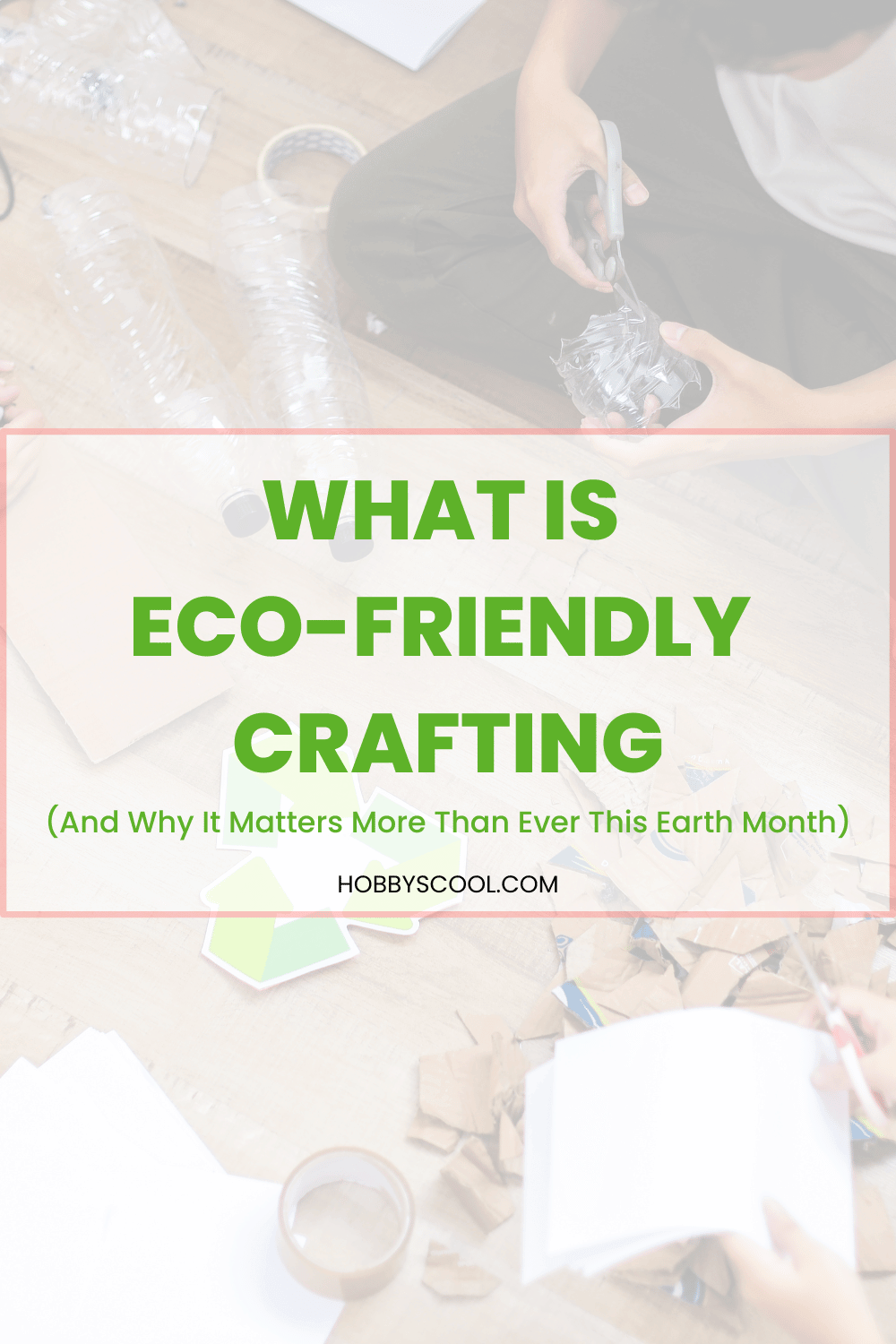
"Your recycling bin is full of beautiful things. Bottle caps, old packaging, worn-out clothes, cardboard tubes — every one of them is a project waiting to happen."
— Dr. Destini Copp, HobbyScoolWhat Does Eco-Friendly Crafting Actually Mean?
Eco-friendly crafting isn't about being perfect. It's not about throwing out everything you own and starting over with only hemp twine and beeswax. It's about making more conscious choices, one project at a time.
At HobbyScool, we see this mindset showing up more and more across our creative community — and it's one of the most energizing shifts we've witnessed. At its core, eco-friendly crafting focuses on a few key principles:
- Using recycled, upcycled, or sustainably sourced materials
- Reducing waste in how you buy, store, and use supplies
- Choosing non-toxic, biodegradable, or low-impact products
- Repurposing what you already have before buying new
- Supporting makers and brands who share these values
The beauty of it is that eco-friendly crafting often leads to more creative projects — because you're working with constraints, found materials, and a problem-solving mindset that pushes you to think differently.
Why Crafters Are Uniquely Positioned to Lead This Shift
Crafters are already trained to see potential. A cardboard box isn't trash — it's the base of a shadow box. An old t-shirt isn't worn out — it's yarn waiting to be cut. Glass jars aren't recyclables — they're the next vase, candle holder, or organizer on your shelf.
That instinct — to see what something could become rather than what it currently is — is exactly the mindset that drives sustainable living.
Which means you're already halfway there. Eco-crafting just gives that instinct a name and a framework.
The most sustainable craft supply purchase is often the one you don't make. Borrow, repurpose, or source secondhand first — and watch how much more creative your work becomes when you're working with what's already in front of you.
Common Questions About Getting Started
Is eco-friendly crafting more expensive?
Not necessarily. Many eco-friendly practices actually save money — using materials you already have, shopping secondhand, buying quality tools that last instead of cheap ones you replace often. Some specialty sustainable products cost more upfront, but the overall approach trends toward less spending, not more.
Can I still use my existing supplies?
Yes. The most sustainable thing you can do right now is use what you already have. Eco-crafting isn't about creating new waste by throwing away perfectly usable supplies. It's about being intentional going forward.
What are the easiest swaps for beginners?
Start with the highest-impact, lowest-effort changes: switch to recycled paper and cardstock, replace plastic glitter with biodegradable alternatives, use beeswax wraps instead of plastic wrap for storage, and look for secondhand fabric and yarn before buying new.
Is upcycling the same as eco-crafting?
Upcycling — turning something old or discarded into something new and useful — is one of the most popular forms of eco-crafting. It's a great entry point because it's concrete, satisfying, and immediately impactful.
What You'll Learn at the HobbyScool Eco-Creative Summit
On April 21–22, 2026, HobbyScool is hosting the Eco-Creative Summit — a free two-day virtual event built entirely around crafting with the planet in mind. Sessions go live at 9am EDT each day, and every workshop is free for 24 hours.
18 expert instructors. Two days. Zero new supplies required.
Summit Workshop Lineup
- No Pattern, No Pressure: Slow-Stitch a Calming Fabric Roll from Scraps — Christine Burrows
- Trash to Treasure: Turning Bottle Caps into Beautiful Flower Decor — Katie Zetina
- Eco Printing Made Simple: A Clear Approach to Confident Results — Nicola Brown
- Mend Loud: Turn Worn Out Clothes Into Statement Pieces with Simple Hand Stitching — Philomène Cauchois
- Curated, Not Crafty: Quirky Owl Art from Recycled Paper — Becka Rahn
- Cold Process Soap Making To Treat Yourself Every Day — Jasmine Goodwin
- Eco-Chic Organization: Turn Plastic Bottles into Fun, Functional Storage — Susan Santoro
- Upcycling with Wide Washi Tape Decoupage — Adeline Ma
- 7 Everyday Objects You Already Own That Make Art and Crafting Easier — Carina Gardner
- Eco-Chic Bookmarks: 8 Upcycled Designs That Turn Packaging into Art — Jasmine Dhillon
- A Masterclass in Natural Color: Crafting Professional Watercolor & Gouache Paint with Earth Pigments — Leah Fanning
- Trash to Treasure: 3 Cute Paper Crafts from Your Recycling Bin — Diana McDermott
- Turn Junk Into Joy: Create Magical Upcycled Wind Chimes for Your Spring Garden — Shelly Carlson
- Stop Throwing Away Old Jackets! (Try This Genius Redesign Instead) — Asta Jakubson
- "Is That Really a Tea Bag?" — Carol Ann Webster
- Rare Houseplants Made Easy — Brittany Bly
- The Art of Boutique Upcycling: Transforming Shopping Bags into High-End Gift Wrap — Gina Tepper
- From Trash to Treasure: 4 Stunning Earrings from ONE Soda Can — Janet Trieschman
Every presenter is an expert in their craft. You'll leave with actual skills, not just inspiration — and projects you can start with things you already have at home.
How to Get Started Before the Summit
You don't have to wait until April 21 to start thinking differently about your craft practice. Here are a few things you can do right now:
- Take a materials audit. Look at what you have. What's sitting unused? What could be repurposed?
- Start a scraps bin. Instead of tossing small fabric, paper, or yarn pieces, collect them. You'll be amazed what they become.
- Research one swap. Pick one supply you use regularly and look for a more sustainable alternative.
- Follow eco-crafters online. Seeing what others are making with secondhand and recycled materials is genuinely inspiring.
Then register for the Eco-Creative Summit and spend two days going deeper with a community of like-minded crafters who are serious about both creativity and the planet.
Free Virtual Summit — Craft with the Planet in Mind
18 expert-led workshops. 9am EDT each day. No new supplies needed — just creativity and the stuff headed for the trash.
Reserve My Free Spot →Frequently Asked Questions
Yes — your free ticket gives you access to all workshops during the Eco-Creative Summit (April 21–22, 2026). Each day's content is free for 24 hours starting at 9am EDT. Upgrade to a VIP Pass for extended access.
No — every project is designed around materials you already have: bottle caps, old clothes, scraps, packaging, cardboard. No shopping trip required.
Not necessarily. Many eco-friendly practices actually save money — using materials you already have, shopping secondhand, buying quality tools that last. The overall approach trends toward less spending, not more.
Start with paper — switching to FSC-certified or post-consumer recycled cardstock requires no change in technique and is widely available. Next easiest: swap plastic glitter for biodegradable plant-cellulose alternatives.
Yes. The most sustainable thing you can do right now is use what you already have. Eco-crafting isn't about creating new waste by discarding perfectly usable supplies — it's about making more intentional choices going forward.