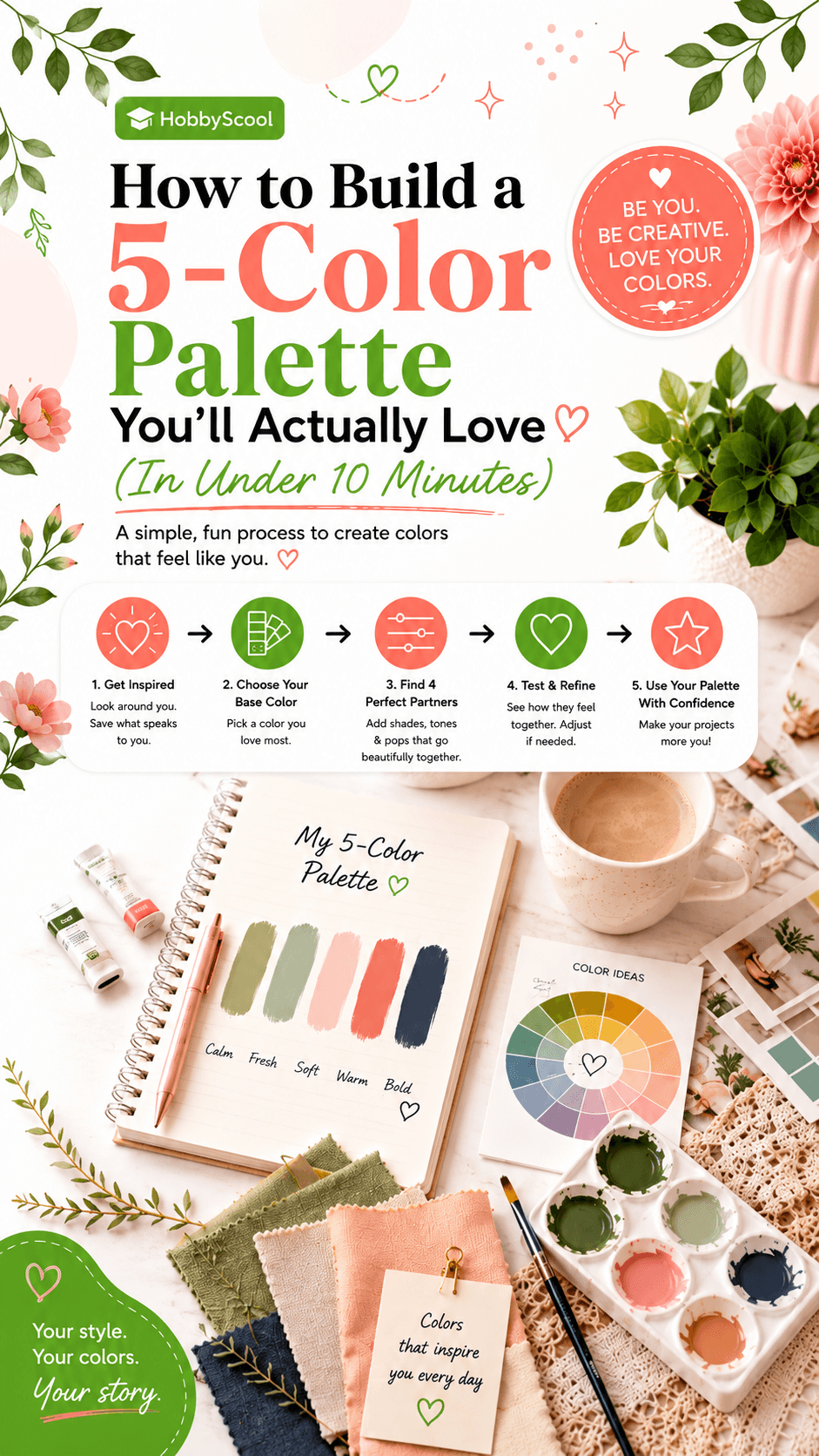
How to Build a 5-Color Palette You'll Actually Love (In Under 10 Minutes)
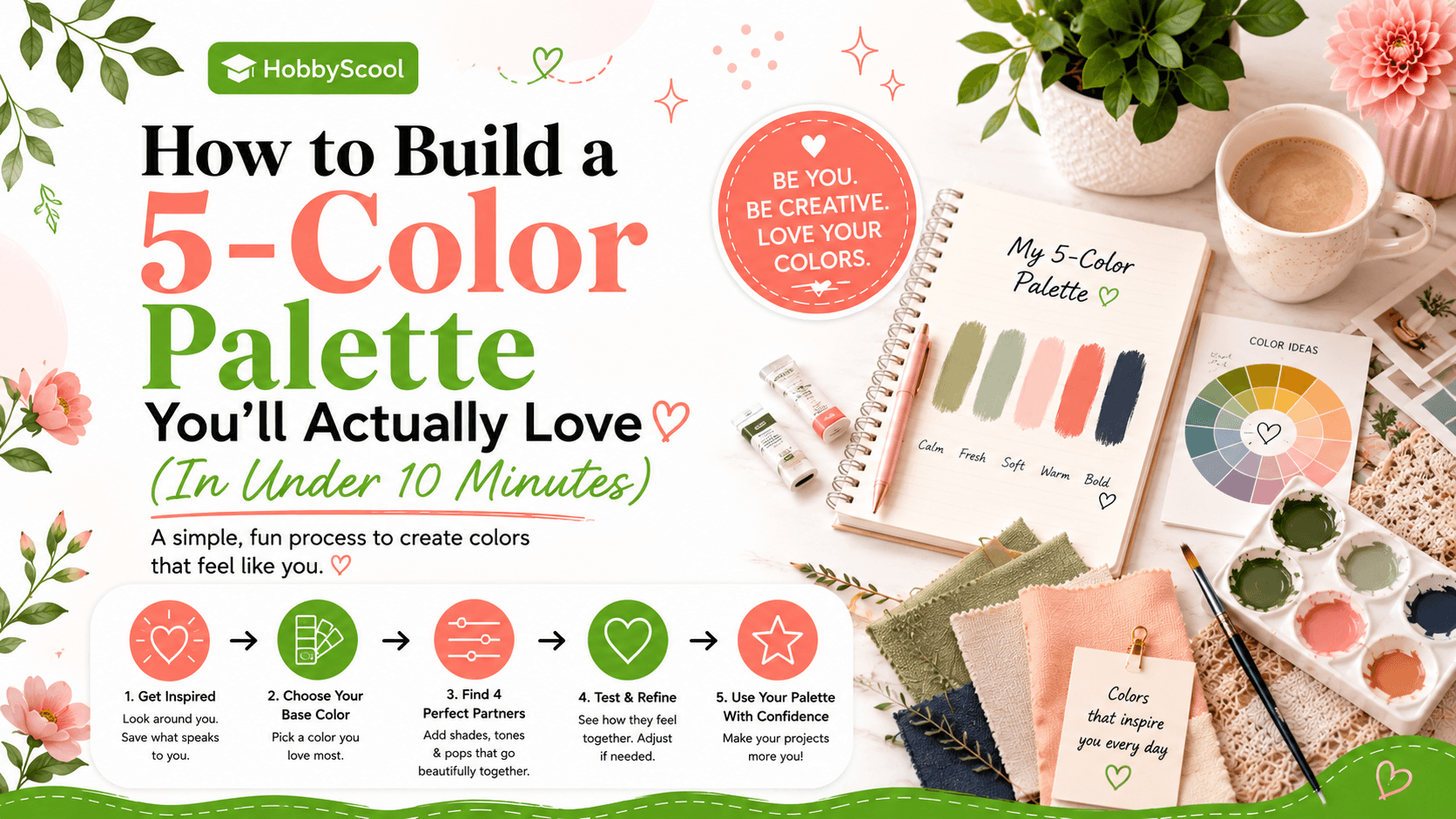
You've stood in the fabric aisle, or scrolled a paint supplier's website, holding two, three, four colors — each one beautiful on its own — with absolutely no idea whether they'll actually work together once you commit. It's one of the most common frustrations we hear from makers at HobbyScool: not a lack of taste, but a lack of a repeatable system for choosing colors that click.
Here's a simple five-role method that takes the guesswork out of it, whether you're picking fabric for a quilt, paint for a canvas, or clay for a jewelry piece.
Why "I'll Just Pick What I Like" Doesn't Always Work
Choosing colors one at a time, based purely on which ones you like individually, is the most common way a palette falls apart. A project can be full of gorgeous colors and still look chaotic, because nothing is anchoring the set or creating contrast. The fix isn't more colors — it's giving each color in your palette a specific job to do.
At HobbyScool, we've watched makers go from feeling stuck for an hour picking fabric to confidently building a palette in minutes, once they stop asking "do I like this color" and start asking "what role does this color play."
The 5 Roles Every Palette Needs
1. The Anchor
Your dominant color — the one that will show up the most across the project and set the overall mood. Pick this one first; everything else responds to it.
2. The Supporting Color
A color that harmonizes with the anchor, usually a neighbor on the color wheel, used in a smaller but still noticeable amount.
3. The Accent
A higher-contrast color used sparingly to create visual pop — this is often the color people notice first, even though it takes up the least space.
4. The Neutral
A muted or low-saturation color — cream, gray, tan — that gives the eye somewhere to rest between the bolder colors.
5. The Wildcard
One unexpected color that adds personality — used in the smallest amount, but often the detail people remember.
How to Assign Colors to Each Role in Under 10 Minutes
- Pick your anchor color first — the mood-setter.
- Choose a supporting color that sits near it on the color wheel.
- Add one accent color from the opposite side of the wheel for contrast.
- Add a neutral to balance the intensity.
- Add one wildcard color in a small quantity — a single fabric strip, a single bead, a small brush detail.
That's the whole method. No color-wheel memorization required — just five deliberate roles instead of an open-ended, overwhelming decision.
"A great palette isn't about picking your favorite colors. It's about giving each color a job."
— HobbyScool Creative CommunityLearn the Full Method Live From Jane Harbison
This five-role framework is the foundation of a full live workshop at the HobbyScool Back-to-Creativity Summit: Build Your Perfect 5-Colour Palette in Under 10 Minutes, taught by instructor Jane Harbison on Day 3, August 20, 2026, as part of the "Paint, Clay & Make Anything" lineup.
Jane walks through the method live, applying it to real projects in real time, so you leave the session with a palette you're actually confident about — not just a list of color theory terms.
Whether you're color-blocking a quilt, mixing paints, or choosing polymer clay colors for a jewelry piece, this session is built to make your next color decision the easiest part of the project, not the most stressful one.
Master Color in Under 10 Minutes
Register free for the Back-to-Creativity Summit, August 18–20, 2026, and build a palette you'll actually love.
Frequently Asked Questions
This usually happens when colors are chosen individually rather than as a coordinated set. A project can use beautiful colors on their own and still look off if there isn't a clear anchor color and enough variation in value (light versus dark) tying them together.
A well-rounded five-color palette typically includes a dominant anchor color, a supporting color, an accent color for contrast, a neutral, and one unexpected color that adds personality without overwhelming the set.
Yes. The five-role approach to building a palette applies to quilting, painting, polymer clay, embroidery, and virtually any visual craft where color choices affect the finished look.
Experienced makers typically work from a repeatable framework rather than choosing colors from scratch each time, which is why structured methods, like assigning each color a specific role in the palette, can shortcut the process to just a few minutes.
The HobbyScool Back-to-Creativity Summit includes a live workshop, Build Your Perfect 5-Colour Palette in Under 10 Minutes, taught by instructor Jane Harbison, and general registration for the summit is free.