

From Yarn to Wearable Art: 6 Fiber Arts Techniques Worth Trying
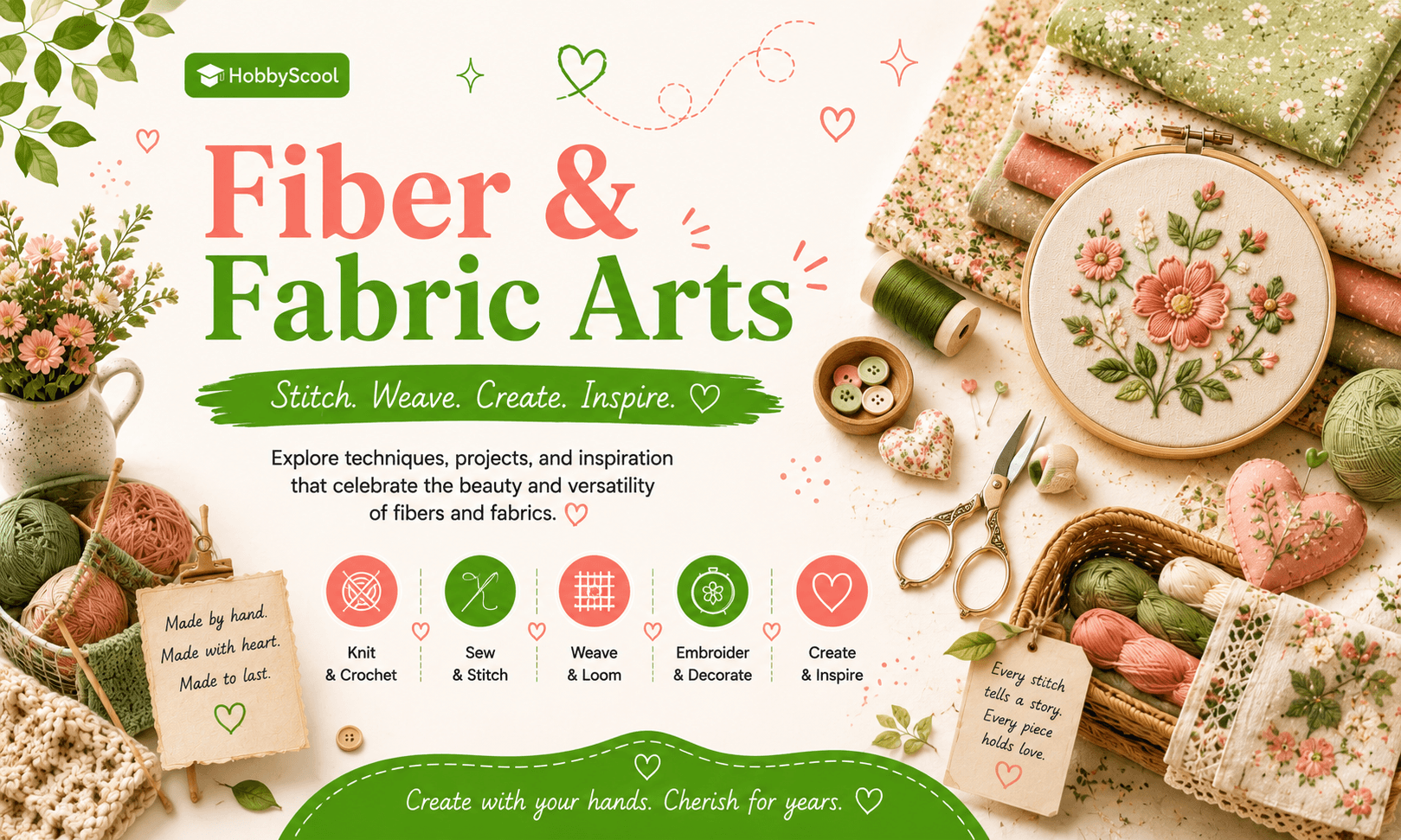
Registration is open for The Art of Handmade Summit 2026, and this week we're digging into Day 2: a full day dedicated entirely to fiber and fabric arts, running Wednesday, September 16. If Day 1 was about paper, ink, and mixed media, Day 2 is about yarn, thread, cord, and cloth — the materials that turn into sweaters, wall art, and things you can actually wear.
If you've ever run your hands over a hand-knit scarf, tied knots into a friendship bracelet as a kid, or admired a quilt at a craft fair and thought "I wish I could make something like that," Day 2 was built with you in mind. It's also for makers who already crochet or sew and want to pick up a technique that's new to them — sculptural embroidery, machine knitting, eco printing, and more.
"Slow down, work with your hands, and remember how good it feels to make something that's truly, unmistakably yours."The Art of Handmade Summit 2026
Below, we're spotlighting six of the Day 2 sessions we're most excited about — a mix of techniques you can pick up in an afternoon and ones you'll want to keep coming back to. This is your sign to clear a little space on the calendar for September 16.
What Counts as "Fiber & Fabric Arts," Exactly?
It's a broad category, and that's kind of the point. Sewing, embroidery, knitting, crochet, and macrame all fall under the fiber arts umbrella — different tools and techniques, but the same basic idea: you're taking thread, yarn, or cord and turning it into fabric, structure, or decoration, one stitch or knot at a time.
What we love about this category is how differently each craft feels to actually do. Embroidery is slow and meditative, one stitch building on the last. Crochet has a rhythm to it once your hands know what they're doing. Macrame is almost architectural — you're building a structure out of knots. Sewing and machine knitting bring a tool into the mix that speeds things up without taking the "handmade" out of the equation. Day 2 gives you a taste of several of these at once.
At HobbyScool, we've been tracking which craft categories light up our community throughout the year, and fiber arts consistently shows up near the top of the list. There's something about working with yarn, thread, and fabric that feels approachable no matter where you're starting from — you don't need a studio, a kiln, or a big investment in tools to try your first stitch.
6 Fiber Arts Techniques Worth Trying (Straight From Day 2's Lineup)
These six sessions are a small sample of what's happening on Day 2, chosen because they span such different corners of fiber arts — from sculptural embroidery to machine knitting to eco printing. Each one is taught by a maker who specializes in that exact technique, so you're learning it from someone who lives and breathes it.
Meredith Woolnough — Thread Bowls: An Introduction to Sculptural Embroidery
Ever seen embroidery that holds its own shape, like lace caught mid-air? That's the idea behind thread sculpture — stitching a design onto a soluble stabilizer, then dissolving the stabilizer away so only the threads remain, holding their form as a freestanding bowl. This session is a great entry point if you want to see embroidery as something more than flat decoration on fabric.
Melissa Steiner — From Yarn to Finished Project: Building Confidence with Crochet
If you've got a hook and a half-finished project tucked in a bag somewhere, this session is for you. It's built for makers who know the basic stitches but tend to stall out before the finish line, with a focus on reading a pattern with more confidence and actually carrying a project through to something you'd be proud to use or give away.
Tuija Mäntylä — Make a Macrame Flower Keychain: A Sweet Little Macrame Project for Beginners
Macrame has a reputation for being fussy and huge — think giant wall hangings — but a flower keychain is about as forgiving a first project as it gets. It's a handful of knots, a bit of cord, and a finished piece you can actually carry around, making it a lovely, low-pressure way to learn foundational knots without committing to something enormous first.
Jan Appleton — Still Handmade, Just Faster: Why Machine Knitting Belongs in Every Maker's World
Machine knitting can sound like it doesn't quite "count" as handmade, but the maker is still the one choosing the yarn, setting the tension, and shaping every piece by hand at the machine. This session makes the case for adding a knitting machine to your toolkit as a way to knit more, and faster, without losing the craft and the decisions that make a piece feel like yours.
Sarah Ward — Smocking (And Pleating) For Beginners!
Smocking looks impossibly intricate until you see it broken down: rows of small, even pleats, gathered and then stitched into decorative patterns that add stretch and texture to fabric. This beginner session covers both halves of the process — the pleating that sets up the fabric, and the embroidery stitches that turn it into the honeycomb, wave, or diamond designs you see on heirloom garments.
Nicola Brown — One Sweater, Many Possibilities: Eco Printed Wearable Art
Eco printing uses leaves, flowers, and other plant material pressed directly onto fabric (often with heat, steam, or a mordant) to transfer their natural shapes and pigments onto cloth, turning a plain piece into something one-of-a-kind. This session applies the technique to a sweater specifically, so you'll come away with ideas for transforming wearables you already own into eco-printed pieces nobody else will have.
These six sessions are just a starting point. Day 2 includes 11 total workshops covering sewing, embroidery, knitting, crochet, and macrame — the full lineup, including sessions on hand-sewing a pocket square, portrait embroidery, felt sculpture, and more, is only visible once you register for the summit.
How Day 2 Fits Into the Full Summit
The Art of Handmade Summit 2026 runs three days, and each day has its own theme and its own set of 11 free workshops, released each morning and free to watch for 24 hours.
11 free workshops on sewing, embroidery, knitting, crochet, and macrame, live for 24 hours.
Day 2 doesn't stand alone, either. Day 1 (Tuesday, September 15) is all about paper and mixed media — botanical printing, mini albums, art journaling, and hand-drawn florals. Day 3 (Thursday, September 17) rounds things out with clay, decor, and beyond, including polymer clay jewelry, quilting, and fabric painting. Register once, and all three days — 33 workshops from 33 expert makers — are yours to explore.
Why Fiber Arts Are Having a Moment
Fiber crafts aren't new, but interest in them has been steadily climbing for years. The Craft Yarn Council, which tracks participation in knitting and crochet across the U.S., has documented a wave of newer, often younger makers picking up hooks and needles — drawn in partly by a desire to slow down and make something tangible with their hands instead of another tab open on a screen.
That's really the spirit behind Day 2. None of these six sessions requires a studio, a big stash of specialty tools, or years of experience. A crochet hook, a length of cord, a needle and floss — that's most of what you need to start. What you bring is the willingness to sit with something slow for a little while and see what your hands can do with it.
Getting the Most Out of Day 2
If fiber arts are new to you, we'd suggest picking one or two sessions from the beginner-friendly end of the spectrum — Tuija Mäntylä's macrame keychain or Sarah Ward's smocking basics are both great low-commitment starting points. If you already crochet, knit, or sew, this is a good day to stretch into something adjacent, like Meredith Woolnough's thread sculpture or Nicola Brown's eco printing, and see how it changes the way you think about your usual craft.
And because every Day 2 session is free to watch for 24 hours after it's released, you don't have to choose just one. Queue up a few, make a cup of tea, and treat the day like a mini fiber arts retreat you can do from your own kitchen table.
Save Your Free Seat for Day 2
The Art of Handmade Summit runs September 15–17, 2026 — 33 free workshops, no credit card required. Register once for full access to Day 2's fiber and fabric arts lineup.
Frequently Asked Questions
Day 2 of The Art of Handmade Summit (Wednesday, September 16, 2026) is dedicated to fiber and fabric arts, with 11 free workshops covering sewing, embroidery, knitting, crochet, and macrame. The lineup includes sessions from Meredith Woolnough, Melissa Steiner, Tuija Mäntylä, Jan Appleton, Sarah Ward, and Nicola Brown, among others. The full 11-workshop schedule is only visible once you register for the summit.
No. Several Day 2 sessions are built specifically for beginners, including Tuija Mäntylä's macrame flower keychain project and Sarah Ward's smocking and pleating class, so you can start from zero. Other sessions, like Jan Appleton's machine knitting talk, are geared toward makers ready to add a new skill to crafts they already know.
Yes. HobbyScool's Art of Handmade Summit is 100% free and 100% online, running September 15 to 17, 2026, with no credit card required to register. Each day's 11 workshops are free to watch for 24 hours after they're released, and you only need to register once for access to all three days.
Each day's workshops, including Day 2's fiber and fabric arts sessions, are free to watch for 24 hours after they're released that morning. If your schedule doesn't line up, or you want to rewatch a session like Meredith Woolnough's thread bowl class later, HobbyScool offers an optional VIP upgrade with lifetime access to all summit recordings.
Fiber and fabric arts are Day 2 of a three-day summit. Day 1 (Tuesday, September 15) focuses on paper and mixed media, including botanical printing, mini albums, and art journaling. Day 3 (Thursday, September 17) covers clay, decor, and beyond, including polymer clay, quilting, and fabric painting. All three days are free with one registration.