

5 Paper Craft Techniques Beginners Can Learn This Fall
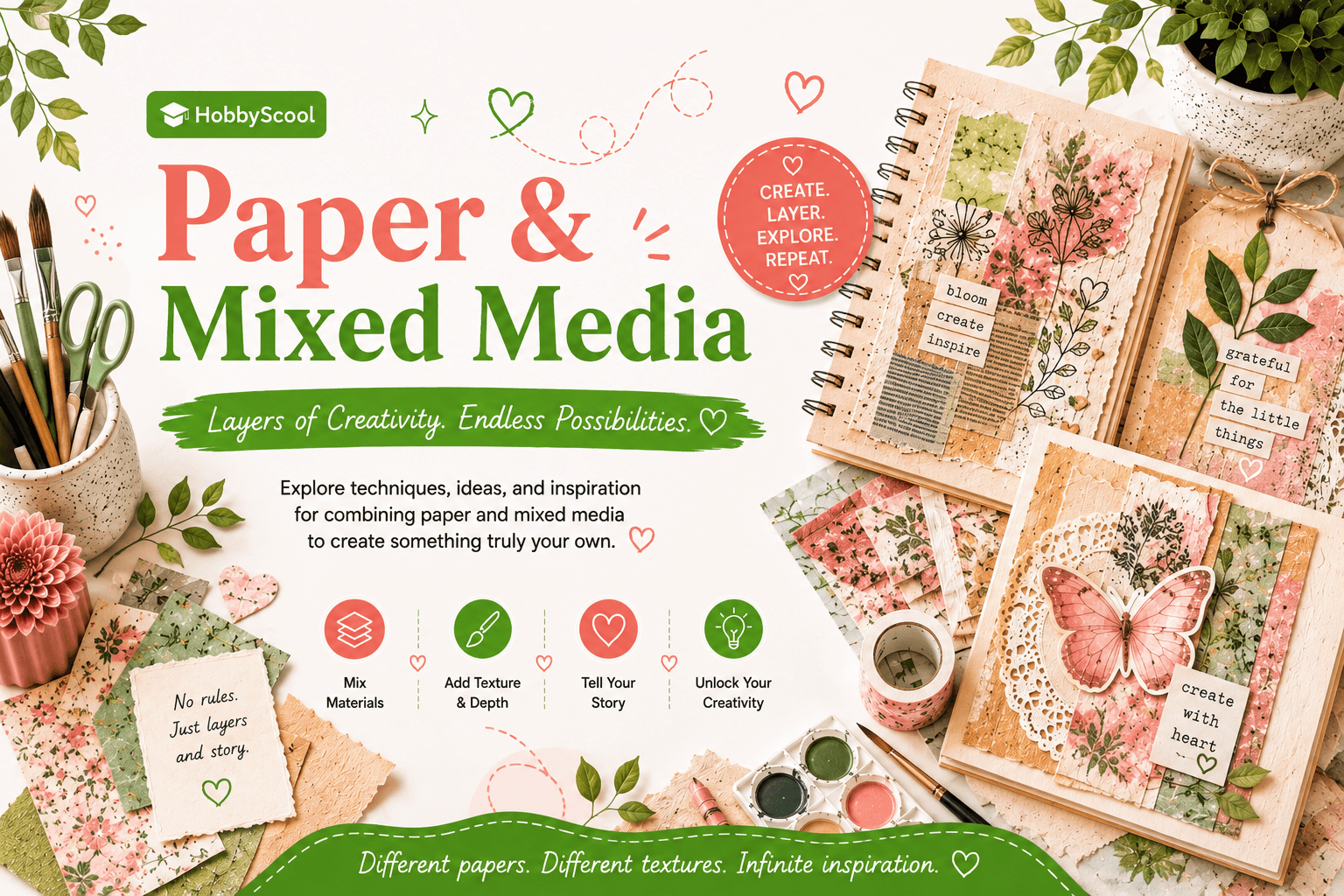
If your idea of paper crafting starts and ends with a folded birthday card, this fall is a good time to find out how much further paper can go. Botanical prints pulled straight from the garden. Mini albums that fold out like tiny accordions. Cards with pop-up mechanisms you can actually explain once you've made one. Journals that finally feel like they belong to you.
That's exactly the territory covered on Day 1 of The Art of Handmade Summit 2026, a free online event running September 15–17. Day 1, Tuesday, September 15, is devoted entirely to Paper & Mixed Media — and it's stacked with beginner-friendly teaching from makers who clearly love handing this craft to someone brand new.
Here's what we're seeing: paper crafting is having a real moment right now, and not the scrapbooking-aisle version you might remember. It's slower, more textural, more personal. Below, we're rounding up 5–6 of the techniques you can learn on Day 1 alone, plus what to expect from the day as a whole.
Everything below is taught live and free during the summit. You don't need fancy tools, a studio, or years of craft experience — just curiosity and a kitchen table. Register free here to get the daily workshop links in your inbox.
Why Paper Crafting Is Worth Picking Up This Fall
There's something about autumn that makes people want to slow down and work with their hands. The light changes, the air cools, and suddenly a quiet evening with a stack of paper and a craft knife sounds appealing in a way it didn't in July. Paper crafting fits that mood perfectly — it's inexpensive to start, forgiving of mistakes, and endlessly varied in where it can take you.
It's also having a genuine cultural moment. The Smithsonian's ongoing interest in paper arts reflects a broader craft-world trend: people are returning to tactile, screen-free making, and paper is one of the most accessible entry points there is. You likely already have some of what you need sitting in a drawer.
At HobbyScool, we've been tracking which crafts our community keeps coming back to, and paper crafting consistently tops the list for beginners — it's low-cost, low-commitment, and high-reward. You can finish a project in an afternoon and actually use or gift what you made.
5 Paper Craft Techniques You Can Learn on Day 1
Day 1 of the summit brings together teachers covering botanical printing, paper flowers, interactive card mechanics, mini albums, journal-making, and art journaling. Here are six of the sessions worth building your Tuesday around.
Victoria Martinez Azaro — Master Botanical Printing on Paper, Start to Finish
Botanical printing is the technique of transferring the color and shape of real leaves and flowers directly onto paper, and it's a lovely way to bring the outdoors onto your desk. This session walks through the process start to finish, so beginners can follow along without guessing at any step.
It's approachable because it uses materials you can gather on a walk — there's no elaborate setup required to get a beautiful, one-of-a-kind result.
Terri Johnson — Paper Blooms for Spring
Paper flowers are one of the most satisfying beginner projects in the whole craft, because a few simple cuts and curls of paper can turn into something that looks genuinely impressive. This session breaks the process down into repeatable steps, so once you learn one bloom, you can start making variations on your own.
It's a great confidence-builder for anyone who's never picked up paper flower techniques before — no special tools required, just paper, scissors, and a little patience.
Tricia Morris — Wiper Card Magic: 4 Interactive Cards + the Paper Crafting Science Behind Every Fold
Interactive cards — the kind where sliding or pulling a tab makes an image move or "wipe" across the page — look like advanced engineering, but they come down to a handful of repeatable paper mechanisms. This session covers four different card mechanisms and, just as importantly, explains the folding science behind why they work.
Understanding the "why" behind each fold means you'll be able to troubleshoot your own cards later, not just copy a template once and forget how it worked.
Einat Kessler — Infinity Mini Album
An infinity mini album is a small photo album built with a folding structure that lets it unfold and reveal more pages than you'd expect from something so compact — it's a fun bit of paper engineering as much as it is a keepsake. This session teaches the fold structure step by step, which makes it a great first mini album project.
Because the whole thing is built from folded paper rather than complicated binding, it's an approachable entry point into mini album making.
Julia McNeill — Build a Journal That's Perfect for Your Creativity
Not every journal needs to come from a store shelf. This session walks through building a journal that actually fits how you like to create, whether that's writing, sketching, collaging, or a mix of all three.
It's a welcoming starting point for anyone who's felt intimidated by bookbinding in the past — you'll come away with a journal made to your own specifications, not someone else's template.
Demeka Tigner — The First Page: How to Start Art Journaling When You're Afraid to Mess It Up
The blank first page is the single biggest thing that keeps people from ever starting an art journal, and this session is built specifically to get you past it. It's less about mastering a technique and more about giving yourself permission to make marks without a "right" outcome in mind.
If you've ever bought a beautiful journal and then let it sit untouched because you didn't want to "ruin" it, this is the session that will change how you think about that first page.
"Slow down, work with your hands, and remember how good it feels to make something that's truly, unmistakably yours."The Art of Handmade Summit 2026
There's More Where That Came From
These six sessions are just a slice of what's happening on Day 1. In total, Day 1 alone includes 11 free workshops covering paper and mixed media — everything from resizing photos for scrapbook layouts to junk journal mini albums built from repurposed envelopes to drawing a botanical mandala inspired by a hydrangea. The rest of the schedule for Day 1, plus Days 2 and 3, is revealed to attendees as each day goes live, so the full lineup is only visible once you've registered.
That daily-reveal format is part of what makes the summit feel like an event rather than a static video library — each morning brings a fresh set of workshops that are free to watch for 24 hours before the next day's lineup takes over.
HobbyScool at the Summit: Where Day 1 Fits
The Art of Handmade Summit runs three days, each with its own craft focus. Day 1 is the paper and mixed media day — here's what it covers.
11 free workshops on botanical printing, mini albums, art journaling, interactive cards, and hand-drawn florals — live for 24 hours.
From there, the summit keeps going. Day 2 (Wednesday, September 16) moves into Fiber & Fabric Arts — sewing, embroidery, knitting, crochet, and macrame. Day 3 (Thursday, September 17) closes things out with Clay, Decor & Beyond, covering polymer clay, mixed media, quilting, and fabric painting. We'll be featuring both of those days in upcoming posts, but if you don't want to wait, registering once gets you access to all three.
The creative community is clearly hungry for this kind of low-pressure, skills-first learning. HobbyScool's summit format — free, no app required, just a daily email with links — is designed to make it as easy as possible to actually show up and make something.
Getting the Most Out of Day 1
If paper crafting is new to you, here's how to approach the day without feeling overwhelmed by 11 workshops:
- Pick two or three sessions that genuinely excite you rather than trying to watch everything live. Each workshop stays up for 24 hours, so you have room to be selective.
- Gather basic supplies ahead of time — cardstock, scissors, a bone folder or something similar for creasing, and glue. Most Day 1 projects don't require specialty tools.
- Start with whichever session removes the most fear for you personally. If a blank journal page has been stopping you for years, Demeka Tigner's session on starting an art journal is a great place to begin.
- Don't aim for a finished masterpiece the first time. The point of Day 1 is to learn techniques you can keep using, not to produce a perfect result on the first try.
If you've ever wanted to try botanical printing, build your own journal, or finally start art journaling without the fear of the first page, this is your sign to set aside Tuesday, September 15 and see what happens.
Frequently Asked Questions
Day 1 of The Art of Handmade Summit, on Tuesday, September 15, 2026, is dedicated to Paper & Mixed Media. The 11 workshops that day cover botanical printing, paper flower making, interactive card mechanisms, mini album construction, journal building, and art journaling for beginners.
No. Every technique featured here, from Victoria Martinez Azaro's botanical printing to Demeka Tigner's approach to starting an art journal, is taught with beginners in mind. HobbyScool's Day 1 lineup is built around approachable, start-to-finish teaching so you can follow along even with basic paper crafting supplies.
Yes. The Art of Handmade Summit is 100% free, held online, and requires no credit card or special app. You'll get a daily email with links to that day's workshops, which are free to watch for 24 hours after they're released.
Day 1 alone includes 11 free paper and mixed media workshops. The complete Day 1 lineup, along with the schedules for Day 2 and Day 3, is revealed to registered attendees as each day goes live, so the full list is only visible after you register.
Day 2 (Wednesday, September 16) shifts to Fiber & Fabric Arts, covering sewing, embroidery, knitting, crochet, and macrame. Day 3 (Thursday, September 17) covers Clay, Decor & Beyond, including polymer clay, mixed media, quilting, and fabric painting.
Interested in one day teaching your own technique to a room full of eager beginners? HobbyScool is always looking for makers to feature in future summits — you can apply to speak here.
Save Your Free Seat
The Art of Handmade Summit runs September 15–17, 2026 — 33 free workshops, no credit card required.