

Quilting for Beginners: A No-Overwhelm Guide to Getting Started
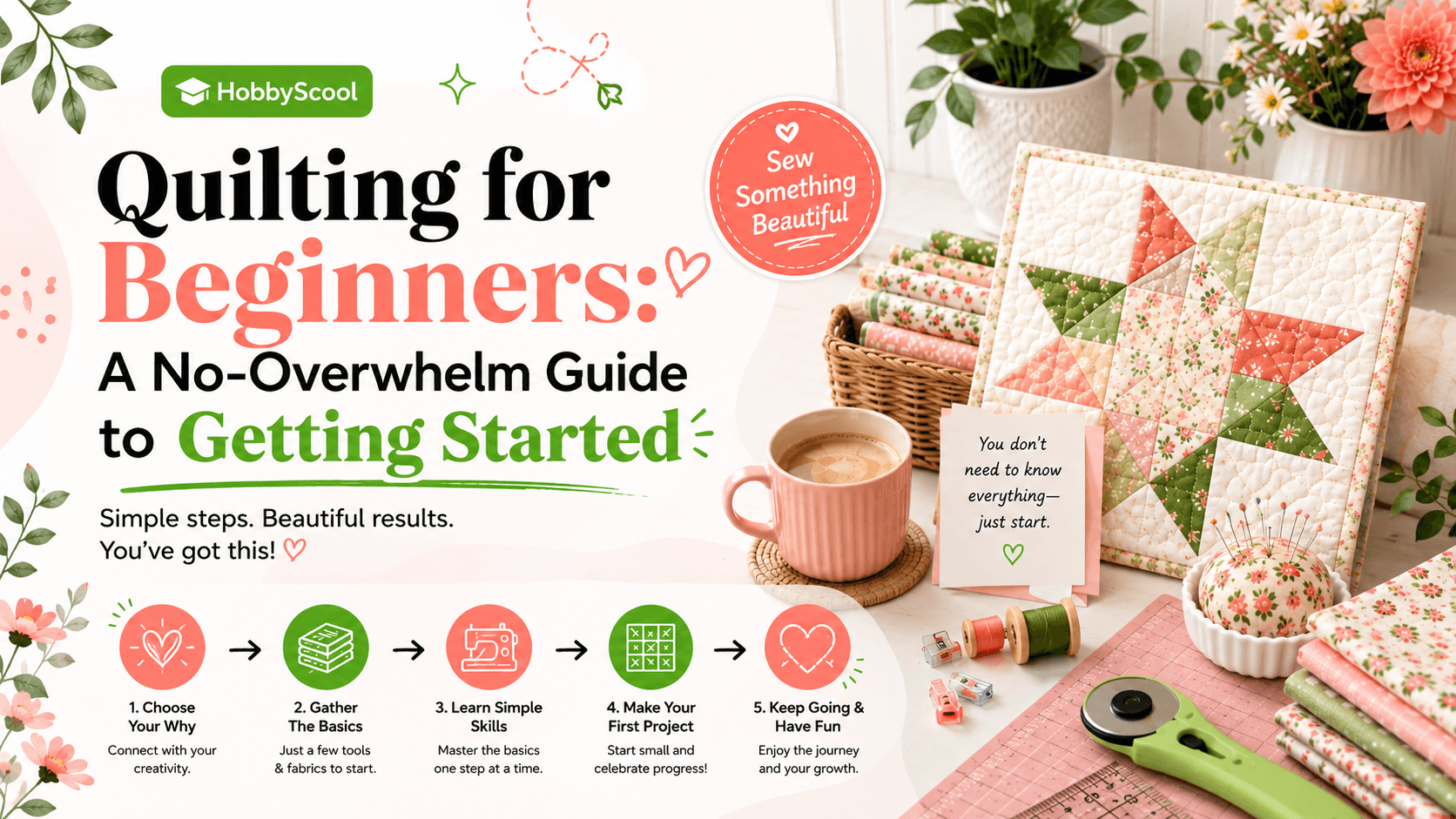
Every quilter you've ever admired — the ones with the color-coordinated fabric stash and the finished quilts on every bed in the house — started with a single, imperfect block. Quilting has a reputation for being intimidating: precise cutting, hundreds of tiny pieces, a whole vocabulary of terms like "fat quarter" and "seam allowance." But the truth is, you can be sewing your first real quilt block within an afternoon, with a small, manageable list of supplies.
This guide walks through exactly what you need, where to start, and how to avoid the overwhelm that keeps so many beginners from ever cutting their first piece of fabric.
What You Actually Need to Get Started
You do not need a design wall, a longarm machine, or a fabric stash that fills a closet. A beginner's true starter kit is short:
- Fabric — a small bundle of coordinating quilting cotton, or even scraps you already own
- A rotary cutter and self-healing mat — for clean, straight cuts
- A clear acrylic quilting ruler — for accurate measurements
- Pins or fabric clips — to hold pieces in place while sewing
- Thread and a sewing machine — any machine that sews a reliable straight stitch will do
HobbyScool's creative community consistently tells us the same thing: the biggest barrier to starting isn't skill, it's the belief that you need professional-grade equipment before you're "allowed" to begin. You don't. Start with what's in your sewing basket right now.
Start With the Easiest Possible Block
Skip anything with curves, triangles, or set-in seams for your very first project. Two blocks are ideal for true beginners:
The Nine-Patch
Nine equal squares sewn into three rows of three, then joined together. It teaches you consistent seam allowances and straight-line piecing without any tricky angles.
The Log Cabin Block
Strips of fabric sewn around a central square, building outward. It's forgiving of small measurement errors and produces a satisfying, dimensional-looking result even as a first attempt.
Either block can become a mug rug, a pillow front, or a mini wall hanging — a small, finishable project rather than a full bed quilt that might sit unfinished for a year.
The Three Skills Every Beginner Needs to Practice
1. Accurate Cutting
Quilting math only works if your pieces are cut precisely. Practice cutting straight strips before you cut for an actual project — a wobbly cut compounds into a warped block by the time you're sewing your tenth seam.
2. A Consistent Quarter-Inch Seam
The standard quilting seam allowance is a scant quarter inch. Most machines have a quarter-inch presser foot, or you can mark your machine bed with tape as a visual guide. Consistency here matters more than perfection.
3. Pressing (Not Ironing) as You Go
Pressing — an up-and-down motion rather than sliding the iron back and forth — keeps seams flat and prevents your block from warping. Press after every seam, not just at the end.
"You don't need to be good at quilting to start quilting. You need to start quilting to get good at it."
— HobbyScool Creative CommunityLearn Live, From Real Quilters, for Free
Tutorials and static how-to articles (this one included) can only take you so far. There's a real difference between reading about pressing seams and watching someone do it in real time, with a chance to ask questions.
That's exactly what Day 1 of the HobbyScool Back-to-Creativity Summit is built for. On August 18, 2026, the "Quilt & Fiber Foundations" day of the summit brings together instructors teaching topics ranging from true beginner blocks to more advanced techniques, including sessions like One Quilt Block, Endless Possibilities, One Block, Endless Quilts: Log Cabin Basics, and an approachable session on free-motion quilting on a standard domestic sewing machine — no industrial longarm required.
Whether you're cutting your first square of fabric this week or you've got a stack of unfinished quilt tops waiting for guidance, there's a workshop built for exactly where you are.
Your First 30 Days as a New Quilter
- Week 1: Gather your starter supplies and practice cutting straight strips.
- Week 2: Sew and press your first nine-patch or log cabin block.
- Week 3: Turn that block into a finished mini project — a mug rug or small pillow front.
- Week 4: Join a live workshop (like the ones at the Back-to-Creativity Summit) to build your next skill with expert guidance.
Quilting rewards patience more than perfection. Your first block won't be your best block — and that's exactly how it's supposed to go.
Join Quilt & Fiber Foundations Day
Register free for the Back-to-Creativity Summit, August 18–20, 2026, and learn directly from expert quilting instructors.
Frequently Asked Questions
At the beginner stage you need fabric, a rotary cutter and mat, a clear acrylic ruler, pins or clips, thread, and a sewing machine that does a basic straight stitch. You do not need a longarm machine, a design wall, or a full fabric stash to make your first quilt block.
A simple nine-patch or a single log cabin block is usually the easiest starting point, since both rely on straight seams and square pieces without curved cutting or set-in seams.
Yes. The HobbyScool Back-to-Creativity Summit includes a full day of quilting and fiber-focused workshops taught live by experienced instructors, and general registration is free.
A single beginner quilt block can typically be finished in an afternoon, and a small mini quilt or table topper is a realistic weekend project once you're comfortable with straight seams.
No. A standard domestic sewing machine that sews a reliable straight stitch is enough to get started with piecing, and even basic free-motion quilting on a domestic machine is achievable with the right guidance.
